
A seller starts on Amazon. Sales grow, so a Shopify store goes live. Then Walmart approval comes through. Within a year, the same brand is managing three separate inventories, three sets of labeling rules, and three places where stock can run out without warning. That’s the problem multi-channel order fulfillment exists to fix.
Before and After: What Changes
Before: Inventory sits split across Amazon FBA, a Shopify-connected warehouse, and a separate Walmart WFS pool. A bestseller can go out of stock on one channel while sitting in surplus on another, because nothing talks to anything else.
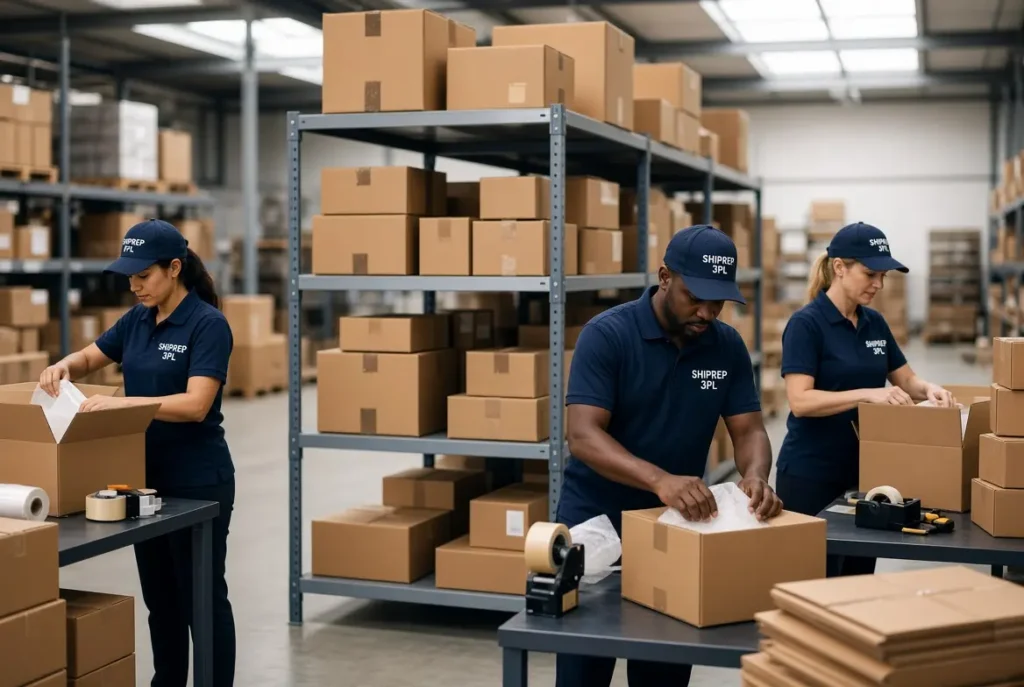
After: One warehouse holds the inventory. Orders from every channel route into the same system, get picked and packed under that channel’s specific rules, and ship out. Stock levels stay accurate everywhere at once.
What Multi-Channel Order Fulfillment Actually Requires
Combining channels under one provider only works if three things are true:
- Direct integration with each sales channel, not manual CSV uploads or copy-pasted order data
- Channel-specific compliance handled correctly, since Amazon, Walmart, and Shopify each have different labeling and packaging rules
- Real-time inventory sync, so a sale on one channel immediately reflects in what’s available on the others
Miss any one of these, and “multi-channel” becomes three separate operations that happen to share a warehouse address.
How Each Channel Fits Into One Fulfillment Process
| Channel | What the provider needs to handle |
|---|---|
| Amazon FBA | FNSKU labeling, poly bagging, shipment plan creation |
| Walmart WFS | GTIN/UPC labeling, case-ready packaging, WFS compliance |
| Shopify | Order sync, pick and pack, branded packaging options |
| Wholesale/B2B | Case or pallet quantities, purchase order matching |
A provider that only does one of these well, while treating the others as an afterthought, isn’t actually offering multi-channel fulfillment, just fulfillment for its preferred channel with extras bolted on.
Signs You Need Multi-Channel Order Fulfillment
- You’re manually tracking inventory across more than one spreadsheet or dashboard
- A product has gone out of stock on one channel while sitting unsold on another
- You’re paying for storage at more than one warehouse or fulfillment network
- Adding a new sales channel means starting a new vendor search from scratch
If two or more of these sound familiar, splitting fulfillment across separate providers is likely costing more than it’s saving.
Questions to Ask Before Consolidating Channels
- Does the provider connect directly to each platform you sell on?
- How does inventory allocation work across channels, can you reserve stock per channel if needed?
- Can it apply different packaging or labeling rules per channel automatically?
- Is there a minimum order quantity, or does a smaller multi-channel operation still qualify?
- How fast does inventory sync update across all connected channels?
Shiprep’s Multi-Channel Order Fulfillment
Shiprep fulfills orders across Amazon FBA, Walmart WFS, Shopify, and B2B/B2C channels from a single warehouse in East Coast USA. The same inventory pool supports FNSKU labeling for Amazon, GTIN/UPC labeling for Walmart, and direct Shopify order fulfillment, so a brand selling across all three doesn’t need separate vendors for each. Full service details are on the services page.
There’s no advance payment, no setup fee, and no minimum order quantity, so a seller consolidating two channels or five is onboarded the same way. For the labeling side of this, see the guides to printing FBA labels and GTIN/UPC labels for Walmart WFS. Estimate costs with the pricing calculator.
Multi-Channel Order Fulfillment: FAQs
What is multi-channel order fulfillment?
It’s the practice of using one fulfillment provider and one inventory pool to fulfill orders from multiple sales channels, like Amazon, Walmart, and Shopify, instead of managing each separately.
Is multi-channel fulfillment the same as omnichannel fulfillment?
They’re related but not identical. Multi-channel typically means orders are fulfilled from a shared inventory pool across separate channels, while omnichannel often implies a more unified customer experience across those channels as well.
Does combining channels under one 3PL save money?
Often, yes. Consolidating storage, reducing duplicate inventory, and avoiding separate vendor fees for each channel typically lowers overall fulfillment cost compared to managing channels separately.
Can a small seller use multi-channel fulfillment, or is it only for large brands?
It works at any scale, as long as the provider doesn’t require a minimum order volume that doesn’t fit a smaller multi-channel operation.
Does Shiprep require a minimum order for multi-channel fulfillment?
No. Shiprep operates with no advance payment, no setup fee, and no minimum order quantity.
Get a free quote from Shiprep and consolidate your Amazon, Walmart, and Shopify fulfillment into one warehouse.
For Amazon’s own comparison of fulfillment options across channels, see Amazon’s guide to Multi-Channel Fulfillment.