
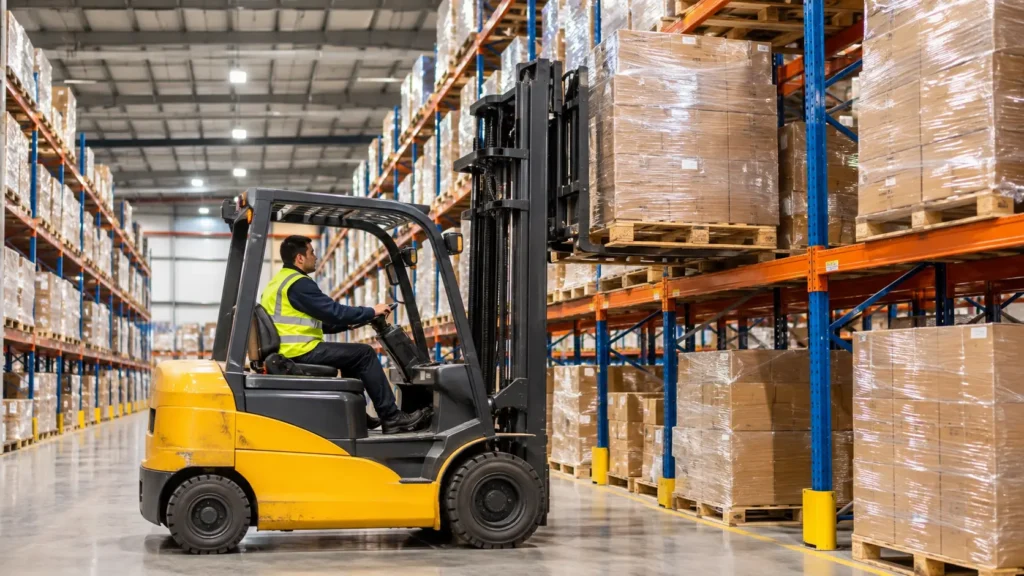
Pallet handling and storage services cover receiving, storing, and moving bulk inventory shipped on pallets rather than individual units. This matters most for wholesale sellers, B2B brands, and anyone importing inventory in bulk before it gets broken down for order fulfillment. Pricing varies more than most sellers expect. The storage method you choose affects cost just as much as volume does.
What Pallet Handling Actually Involves
Receiving. A pallet arrives at the warehouse, gets inspected, counted against the packing list, and logged into inventory. This step typically costs $5 to $15 per pallet.
Storage. The pallet sits in a designated position until inventory gets pulled for an order or further prep. Storage is billed monthly, and the pricing model matters a lot here.
Staging and movement. Pallets move between receiving, storage, and prep areas using forklifts or pallet jacks, following routes built into the warehouse layout.
Outbound handling. When a pallet ships out whole, rather than broken down into individual units, it gets staged and loaded for the outbound carrier.
Current Pallet Storage Pricing in 2026
Standard dry rack storage runs $18 to $25 per pallet per month. The national average sits around $20.17, based on recent industry-wide warehouse pricing surveys.
Floor or bulk-stacked storage costs less, typically $12 to $22 per pallet per month, since it skips racking infrastructure.
Climate-controlled storage runs higher, generally $28 to $45 per pallet per month. This fits products sensitive to temperature or humidity.
On-demand or flexible storage, without a long-term agreement, typically carries a 15 to 30% premium over standard shared-warehouse rates.
Why Storage Pricing Varies So Much
Volume is the single biggest lever. Higher pallet counts typically unlock lower per-pallet rates, since fixed warehouse costs spread across more inventory.
Storage method changes the math. Per-pallet pricing suits uniform, full-height palletized inventory. Per-cubic-foot pricing fits better for smaller or irregular freight. This includes freight that doesn’t fill a full pallet position.
Dwell time matters. A pallet sitting in storage for months costs the same every month whether it sells or not. Slow-moving SKUs can quietly become one of the largest line items in a storage bill.
When Pallet-Level Storage Makes Sense
Wholesale and B2B sellers. Bulk shipments to retail buyers or distributors often move as full pallets, making pallet-based storage and handling the natural fit.
High-volume importers. Sellers bringing in container loads of inventory benefit from pallet storage first. The inventory gets broken down and prepped for individual marketplace orders afterward.
Seasonal overflow. Sellers stocking up ahead of peak season often need bulk pallet storage temporarily. This stays separate from their regular, faster-moving inventory flow.
How to Keep Pallet Storage Costs Down
Run a regular SKU velocity check. Slow-moving pallets cost the same every month whether they sell or not. Catching them early allows a decision before months of fees pile up.
Match the storage method to the inventory. Full, uniform pallets fit per-pallet pricing. Irregular or partial pallets often cost less under per-cubic-foot pricing instead.
Consolidate inbound shipments where possible. Fewer, larger shipments typically reduce per-unit receiving costs compared to frequent, smaller ones.
How Shiprep Handles Pallet Handling and Storage
Shiprep offers pallet handling and storage as part of our broader 3PL services. This sits alongside crossdocking, kitting, and multi-marketplace fulfillment, from our warehouse in Bensalem, Pennsylvania. You can see the full range of services on our services page.
No advance payment, no setup fee, and no minimum order quantity apply to any of our services. You can run your own numbers based on your specific volume with our pricing calculator. International sellers can also access purchasing credit and a Pennsylvania reseller tax exemption, covered in our guide to 3PL prep center services for international sellers.
For a broader look at current national warehousing rate trends, Cushman & Wakefield’s industrial market reports track pricing data across US markets.
Pallet Handling and Storage Services: Frequently Asked Questions
How much does it cost to store a pallet per month?
Standard dry rack pallet storage typically costs $18 to $25 per pallet per month in 2026, with a national average near $20.17. Floor or bulk-stacked storage runs cheaper, usually $12 to $22 per pallet.
What’s the difference between per-pallet and per-cubic-foot storage pricing?
Per-pallet pricing charges a flat monthly rate per pallet position, which suits full, uniform pallets. Per-cubic-foot pricing bills based on actual space used, which often costs less for smaller or irregular shipments.
Why does climate-controlled pallet storage cost more?
Climate-controlled storage requires additional equipment and energy to maintain temperature or humidity. This typically pushes pricing to $28 to $45 per pallet per month, compared to $18 to $25 for standard dry storage.
Is pallet storage only useful for large businesses?
No. Any seller receiving bulk inventory on pallets, including smaller wholesale or seasonal-overflow sellers, can benefit from pallet-level storage rather than breaking everything down immediately upon receiving.
How can I reduce my monthly pallet storage costs?
Run regular SKU velocity checks to catch slow-moving inventory early, match your storage method to your actual inventory shape, and consolidate inbound shipments where possible to reduce per-unit receiving costs.
Get a free quote from Shiprep to see what pallet handling and storage would actually cost for your inventory volume.