
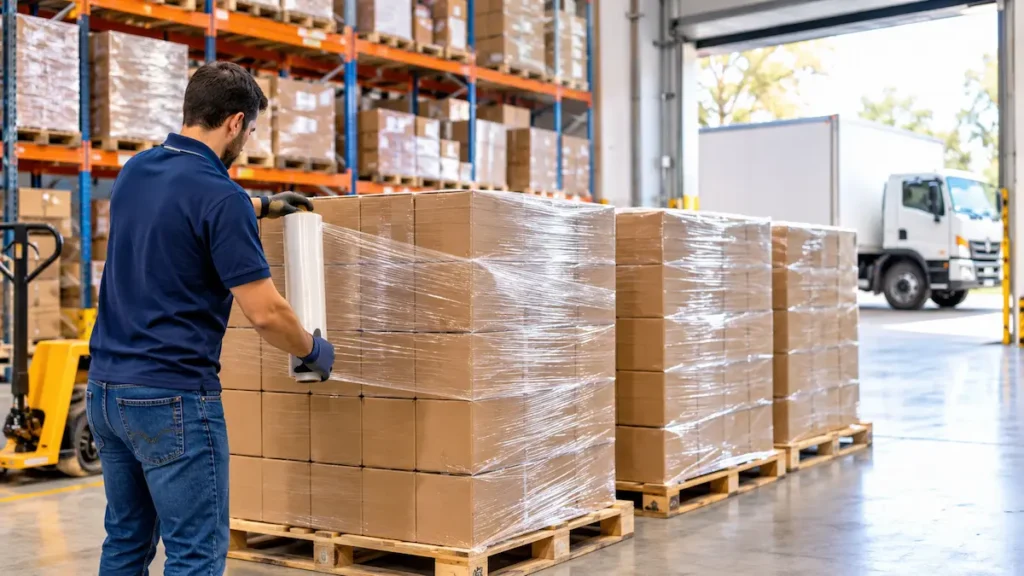
An Amazon 3PL warehouse is a third-party logistics facility that stores inventory, preps shipments, and fulfills orders for Amazon sellers, operating entirely outside Amazon’s own FBA network. It’s not a warehouse Amazon owns or runs. It’s an independent company’s facility built to support sellers who use Amazon as one of their sales channels.
The Confusion This Phrase Creates
Many sellers search “Amazon 3PL warehouse” expecting it to mean something inside Amazon’s own fulfillment network. It doesn’t. FBA, Fulfillment by Amazon, is Amazon’s in-house service. An Amazon 3PL warehouse is a completely separate, independent business that happens to prep and ship inventory destined for Amazon, alongside other marketplaces.
FBA vs. a Third-Party Amazon 3PL Warehouse
FBA stores and ships only for Amazon. Your inventory sits inside Amazon’s own fulfillment centers, and Amazon handles picking, packing, and shipping for Amazon orders specifically.
A 3PL handles Amazon prep, plus everything else. A third-party warehouse preps your inventory to meet Amazon’s compliance standards, then ships it to Amazon’s fulfillment centers. The same warehouse can also fulfill your Walmart, Shopify, and TikTok Shop orders from the same inventory pool.
Pricing works differently too. FBA fees are set by Amazon based on size and weight, with limited flexibility. A 3PL’s pricing structure often allows more negotiation and can be more cost-effective, particularly during peak season storage spikes.
Why Sellers Choose a 3PL Alongside or Instead of FBA
Multi-channel selling gets simpler. Running inventory through FBA only works for Amazon orders. A 3PL fulfills across every marketplace from one pool, which avoids splitting stock between separate systems.
FBA prep compliance now falls entirely on sellers. Amazon stopped handling prep and labeling itself in January 2026. A 3PL that specializes in FBA compliance catches labeling, packaging, and documentation issues before a shipment ever reaches Amazon’s dock.
Storage costs can be lower outside peak season spikes. FBA storage rates roughly triple during Q4. A 3PL storing inventory separately, then feeding smaller FBA shipments in as needed, can avoid paying that peak rate on everything held.
Removed or rejected FBA inventory needs somewhere to go. A 3PL can receive, recondition, or liquidate inventory that Amazon removes or rejects, rather than leaving it stranded with no clear next step.
What to Look for in an Amazon 3PL Warehouse
Genuine FBA prep expertise, not just general fulfillment. Many 3PLs focus on direct-to-consumer shipping without deep experience in Amazon’s specific compliance requirements. Confirm this directly before committing inventory.
Support for your other marketplaces too. If multi-channel selling is the point, confirm the 3PL genuinely supports Walmart, Shopify, eBay, or TikTok Shop, not just Amazon.
Clear, itemized pricing. Compare receiving, storage, prep, and shipping as separate line items rather than one bundled number, so you can see where the actual cost sits.
How Shiprep Operates as an Amazon 3PL Warehouse
Shiprep handles FBA prep, labeling, and compliance from its warehouse on the East Coast of the USA, alongside fulfillment for Walmart, Shopify, eBay, and TikTok Shop from the same inventory pool. You can see the full range of services on the services page.
No advance payment, no setup fee, and no minimum order quantity apply to any of our services. You can read more about the FBA-specific process in our guide to FBA prep and ship, or estimate your costs with the pricing calculator.
Amazon 3PL Warehouse: Frequently Asked Questions
Is an Amazon 3PL warehouse the same as an Amazon fulfillment center?
No. An Amazon fulfillment center is owned and operated by Amazon itself, as part of FBA. An Amazon 3PL warehouse is an independent third-party business that preps and ships inventory for Amazon sellers, separate from Amazon’s own network.
Can a 3PL ship directly to Amazon fulfillment centers?
Yes. A 3PL preps inventory to Amazon’s compliance standards, including FNSKU labeling and packaging requirements, then ships it to Amazon’s fulfillment centers as an FBA inbound shipment.
Is it cheaper to use a 3PL instead of FBA?
It depends on volume and season. FBA pricing is fixed by Amazon based on size and weight. A 3PL’s pricing often allows more flexibility and can avoid FBA’s peak season storage rate spikes.
Do I have to choose between FBA and a 3PL?
No. Many sellers use both, storing bulk inventory at a 3PL and feeding smaller batches into FBA as needed, which helps manage storage costs and multi-marketplace fulfillment together.
What happens to inventory Amazon removes from FBA?
A 3PL can receive removed inventory and recondition it for resale, or liquidate it if it’s no longer sellable, rather than leaving it with no clear next step.
Get a free quote from Shiprep to see how an independent Amazon 3PL warehouse could fit alongside or instead of FBA for your business.
For Amazon’s current, official FBA requirements and the full list of what shifted to sellers in 2026, review Seller Central’s packaging and prep requirements page.