
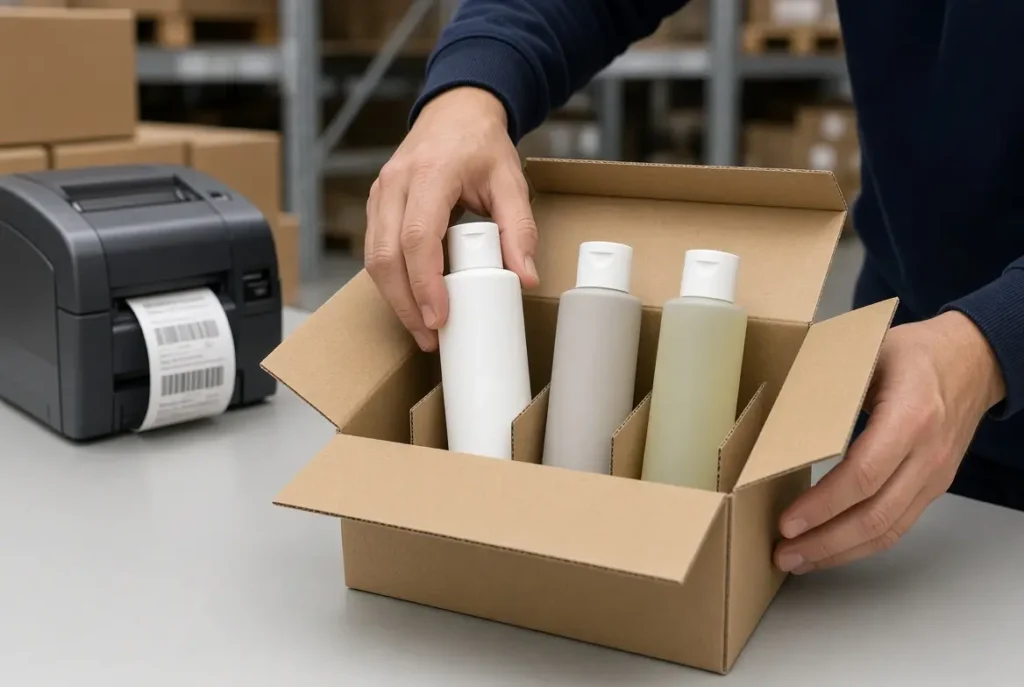
Ecommerce kitting and bundling services combine multiple products into one sellable unit, but they solve different problems. Bundling is a merchandising decision. It groups existing, individually sold products to increase order value. Kitting is a physical operation. It assembles components into a new single SKU that gets picked, packed, and shipped as one unit.
Kitting vs. Bundling: The Core Difference
Bundling stays commercial: A bundle groups standalone products together. Think of a yoga mat, resistance bands, and weights sold as a “home workout bundle.” Each item still sells separately elsewhere. Nothing changes in the warehouse. Bundling can even exist purely in software, at the listing level.
Kitting becomes operational: A kit turns multiple components into one new product with its own SKU and barcode. A skincare kit combining a cleanser, moisturizer, and sunscreen is a common example. The components get physically assembled, labeled, and warehoused as a single fulfillable unit.
The simplest way to tell them apart: if you’re combining finished goods that still sell individually, that’s bundling. If the combination becomes the product itself, requiring warehouse labor and its own barcode, that’s kitting.
Why This Distinction Matters More in 2026
Amazon ended its in-house kitting and bundling services on January 1, 2026. Before that date, sellers could send Amazon individual items and let the fulfillment center assemble them. That option no longer exists. Full responsibility for kitting and bundling compliance now sits with sellers and their 3PL partners.
This shift raises the stakes. A poorly executed kit risks shipment rejection or stranded inventory. A bundle listed incorrectly can trigger compliance flags under Amazon’s current FNSKU requirements. Getting the process right before shipment matters more than it did a year ago.
When to Use Bundling
Testing new offers fast: Bundling works well when you want to test a new combination without committing warehouse resources to physical assembly.
Moving slow inventory.: Pairing a slower-selling item with a high-demand one, at a discount, helps clear stock without touching the warehouse process.
Increasing average order value. Grouping complementary products at checkout or on a listing page increases basket size with minimal operational change.
When to Use Kitting
Subscription boxes: A curated monthly box has no virtual equivalent. Every cycle is a full kitting run, often with a configuration that changes month to month.
Reducing per-unit fulfillment fees: A kit ships and gets picked as one unit. It incurs one pick-and-pack fee instead of a fee per individual item.
Building proprietary products competitors can’t replicate: A unique kit configuration, sold under its own SKU, is harder for competitors to price-match than individual items sold separately.
High-volume, repeat combinations: Once a specific set of items sells together consistently, pre-assembling it into a kit helps. It cuts picking time and reduces fulfillment errors at scale.
What Compliant Kitting and Bundling Actually Requires
A unique SKU or FNSKU for each kit: Amazon requires kits to carry their own barcode, separate from any component’s individual barcode.
Consistent contents, every time: Amazon and customers both notice inconsistency. Every unit of a kit needs to match its listed contents exactly.
Compliant packaging: Bundled or kitted items still need to meet standard marketplace packaging rules. This includes poly bag thickness and suffocation warnings where applicable.
Accurate documentation: Each kit needs clear records connecting its component items to the finished SKU. This matters for both inventory accuracy and marketplace compliance checks.
What Ecommerce Kitting and Bundling Services Actually Require
Shiprep provides ecommerce kitting and bundling services from a 3PL warehouse in Bensalem, Pennsylvania. Components get assembled, labeled, and packed to current Amazon, Walmart, and eBay compliance standards. You can see the full range of services on our services page.
No advance payment, no setup fee, and no minimum order quantity apply. That’s true whether you’re kitting a handful of units or running a full subscription box program. International sellers can also access purchasing credit and a Pennsylvania reseller tax exemption. Read more in our guide to 3PL prep center services for international sellers. Or estimate your own costs with our pricing calculator.
For sellers building FBA-specific kits, Amazon’s official guidelines on multipacks and bundles are worth reading first. They outline exact labeling and listing requirements before you assemble anything.
Ecommerce Kitting and Bundling Services: Frequently Asked Questions
What’s the difference between kitting and bundling?
Bundling groups existing, individually sold products together to increase order value, without changing anything in the warehouse. Kitting physically assembles components into a new single SKU that gets warehoused and shipped as one unit.
Is kitting more expensive than bundling?
Generally, yes. Kitting requires warehouse labor, a unique barcode, and physical assembly, which adds a per-unit prep cost. Bundling can often happen at the listing level with no added fulfillment cost.
Does Amazon require a separate barcode for kits?
Yes, as of 2026, kits need their own SKU or FNSKU. This is separate from any individual component’s barcode, and Amazon no longer assembles or labels kits in-house.
When should a brand switch from bundling to kitting?
When a specific product combination sells consistently and at volume, kitting it in advance usually helps. It cuts picking time, reduces errors, and lowers per-unit fulfillment fees compared to assembling it at the point of sale.
Can a 3PL handle both kitting and bundling for the same brand?
Yes, Many 3PLs run both processes from the same warehouse and staff. A lot of brands use bundling for testing and promotions while relying on kitting for their proven, repeat-selling combinations.
Get a free quote from Shiprep to see what compliant kitting and bundling looks like for your product line.