
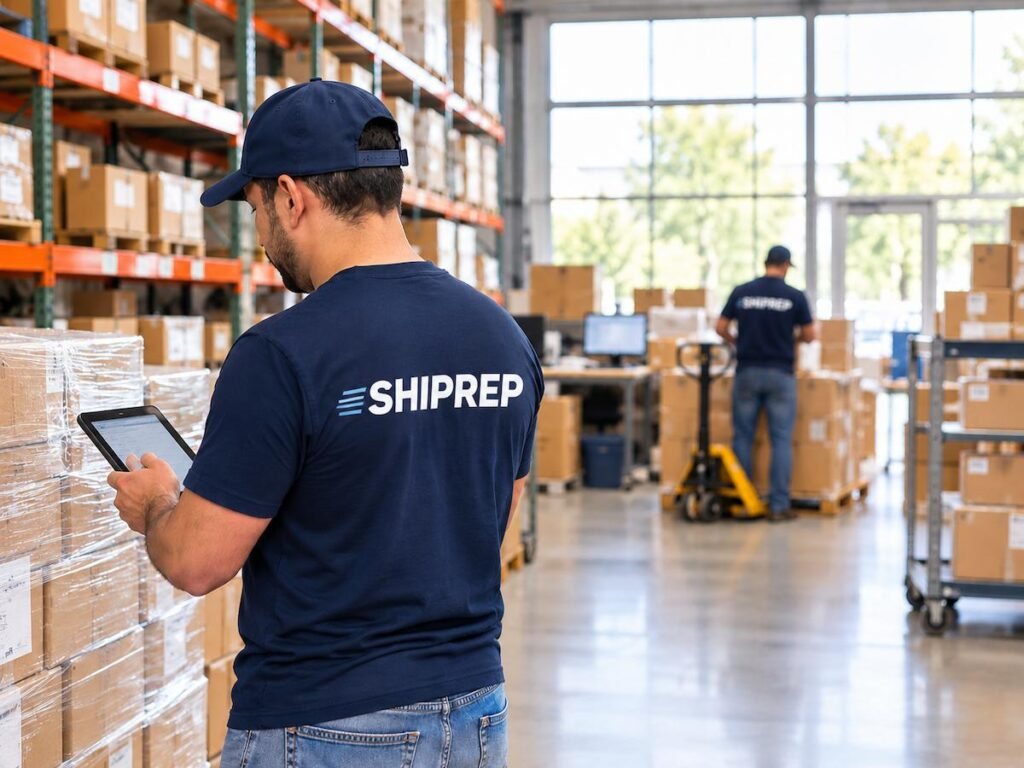
A no advance payment 3PL is exactly what it sounds like. It’s a fulfillment partner that receives, preps, and ships your inventory. You don’t pay a deposit, a setup fee, or a lump sum before they touch a single box. For international sellers, this detail matters more than almost any other factor when choosing a US-based warehouse. Yet almost nobody explains it clearly.
Most sellers ignore payment structure until they’re already locked into a contract. By then, it’s too late to negotiate. At Shiprep, we built our onboarding process to avoid this problem. We don’t charge a deposit, a setup fee, or require a minimum order quantity before we start handling your inventory. This guide breaks down how advance payment models work. It also covers why they carry extra risk for international sellers, and what to check before you sign with any prep center.
Why Most 3PLs Ask for Advance Payment in the First Place
Traditional 3PLs often require an upfront deposit, a minimum monthly spend commitment, or prepayment for a set number of units before they’ll onboard you. A few reasons explain this pattern.
Cash flow protection for the warehouse: Receiving and storing inventory costs the 3PL money from day one. Your product hasn’t shipped out or generated revenue yet. An upfront payment covers that gap.
Filtering out low-volume or unproven sellers: Some 3PLs use deposits to screen out sellers they consider too small or too risky. This hits newer brands without an established sales history the hardest.
Locking sellers into long-term contracts: Once you’ve paid a deposit, switching to a different 3PL means walking away from money you’ve already spent. This makes it harder to leave, even when service quality drops.
None of these reasons benefit you as the seller. They protect the warehouse’s cash flow and retention, not your business outcomes.
Why This Is a Bigger Problem for International Sellers Specifically
If you run your business from outside the US, advance payment models create risks that domestic sellers rarely face.
You can’t inspect the warehouse before paying
A US-based seller can often visit a facility, meet the team, and watch operations run before committing money. An international seller has to trust photos, a website, and a sales call instead. Paying a large deposit before verifying service quality is already risky. It gets riskier still when you can’t easily follow up in person.
Currency conversion adds hidden costs to every payment
Every transfer from your local currency into USD carries a conversion fee and an exchange rate spread. An upfront deposit isn’t just the sticker price. Add whatever your bank or payment provider takes on the conversion, and the real cost climbs higher.
International freight already stretches your cash flow thin
By the time your inventory reaches a US prep center, you’ve already paid your supplier and covered international freight. Customs duties often add another cost on top. A warehouse deposit on top of all that ties up capital before a single unit sells.
Recovering a deposit from an underperforming 3PL is harder across borders
A domestic seller with a dispute has local legal recourse. An international seller chasing a refund from overseas has far less leverage and far fewer practical options.
What to Check Instead of Paying a Deposit
Ask these questions directly before signing with any prep center. If a provider hesitates or gives vague answers, treat that as a warning sign.
Is there a setup fee or account minimum?
A genuine no-advance-payment model charges you only for services as you use them. It never asks for a lump sum to “activate” your account.
Is there a minimum order quantity?
Some providers skip the deposit but quietly require high monthly volume instead. That’s just a different version of the same lock-in problem. Shiprep sets no minimum, so you can ship 1 unit or 10,000 under the same terms. Run your own numbers on Shiprep’s pricing calculator before you commit to anything.
Is there a long-term contract?
No advance payment loses most of its value if you’re still locked into a 12-month agreement. Look for month-to-month terms you can leave at any point. Shiprep runs with no long-term contracts, so you can cancel anytime without losing money you’ve already paid.
How is billing structured once you’re onboarded?
Confirm exactly when charges hit: per unit received, per order shipped, per month of storage. Clear, itemized billing signals a transparent operator. See how Shiprep structures this on our services page.
Red Flags to Watch For
A genuine no advance payment 3PL should hold up under scrutiny before you sign anything. Watch for these warning signs.
Vague pricing until after you’ve committed: If a 3PL won’t give you clear numbers before you sign anything, that works against you, not for you.
Pressure to “lock in a rate” quickly: Urgency tactics around deposits often signal terms that won’t hold up if you take time to compare them.
No clear refund policy if you cancel early: Ask directly what happens to any funds on your account if you leave. A provider confident in their service won’t complicate this.
FAQ: No Advance Payment 3PL for International Sellers
Does “no advance payment” mean the service is free until my products sell?
No. A no advance payment 3PL still charges for receiving, storage, and fulfillment. You won’t pay a deposit or setup fee before onboarding. We bill you after the fact, once you actually use each service, not upfront.
Is a no advance payment 3PL more expensive per unit to make up for the lack of a deposit?
Not necessarily. Pricing structure and payment timing work as separate decisions. A 3PL can offer competitive per-unit rates without requiring money upfront.
How do international sellers pay ongoing 3PL invoices without a US bank account?
Most 3PLs that work with international clients accept Wise, PayPal, Payoneer, and wire transfer. You usually don’t need a US bank account for setup or ongoing payments. Shiprep accepts all of these and also offers purchasing credit up to $100,000. We pay your overseas vendors directly through domestic banking channels, and you repay us through Wise, PayPal, or Payoneer.
What questions should I ask a 3PL before switching from my current provider?
Ask about exit fees, whether your remaining inventory can transfer directly, and how long the transition typically takes. A provider experienced with onboarding sellers from other 3PLs should answer this without hesitation.
The Real Question to Ask Before You Commit
The real question isn’t “does this 3PL require a deposit?” Ask instead: “What happens to my money and my inventory if this relationship doesn’t work out?” A no advance payment model answers part of that question. Pair it with month-to-month flexibility, transparent per-service billing, and no minimum order quantity to get the full picture.
Want a broader view of how international sellers evaluate US fulfillment, including customs and tax exemptions? The U.S. Small Business Administration publishes general guidance on exporting and cross-border business operations worth reading alongside any 3PL comparison.
Get a free quote from Shiprep and see exactly what you’d pay, and when, before you commit to anything.