
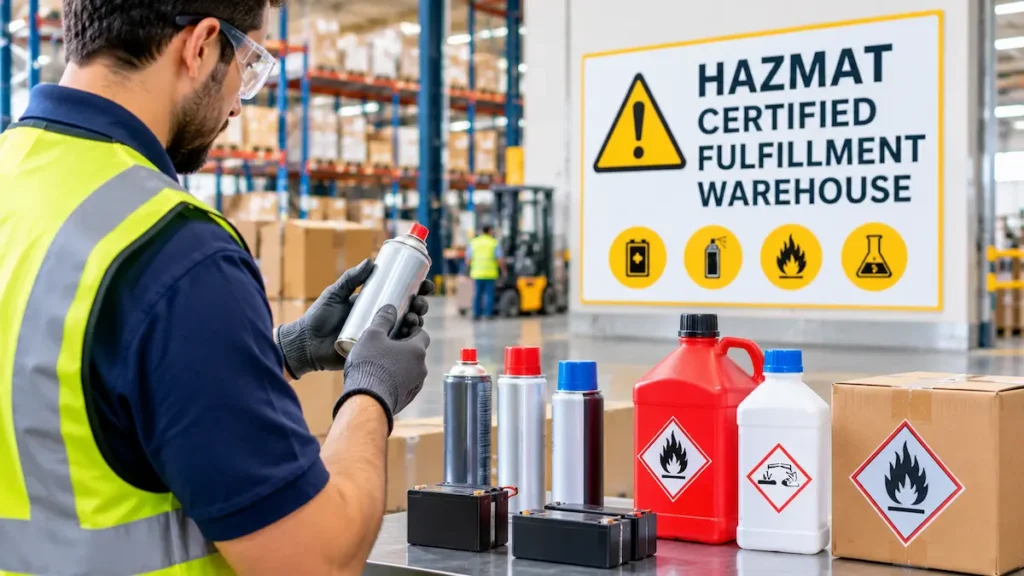
A HAZMAT-certified fulfillment warehouse carries the equipment and authorization to store, handle, and ship products classified as hazardous materials. This includes lithium batteries, aerosols, flammable liquids, and certain cosmetics or cleaning products. Most standard 3PLs won’t accept these items at all. The ones that do need specific infrastructure, training, and documentation that most warehouses don’t have.
What Counts as HAZMAT in Ecommerce
Lithium batteries. Power banks, wireless earbuds, and any electronics with a built-in rechargeable battery fall under hazardous materials shipping rules.
Aerosols. Pressurized contents and flammability risk put spray products like perfumes, deodorants, and cleaning sprays under hazmat rules.
Flammable liquids. Nail polish remover, certain alcohol-based cosmetics, and some cleaning solutions fall into this category.
Corrosive or reactive chemicals. Products like drain cleaners or certain industrial cleaning agents carry handling restrictions; most warehouses aren’t equipped.
Compressed gases. Some beauty and personal care products use compressed gas propellants, which require specific storage conditions.
What Actually Makes a Warehouse HAZMAT Certified
DOT registration. A facility handling hazardous materials needs proper registration with the Department of Transportation. This covers how it stores and ships those materials.
Trained, certified staff. Workers need specific hazmat handling training, not general warehouse onboarding. This covers how to identify, store, and move regulated materials safely.
Segregated storage. Hazardous materials can’t sit alongside standard inventory. A certified facility maintains separate, properly ventilated storage areas built for the specific hazard class involved.
Fire suppression systems. Flammable and reactive materials require fire suppression infrastructure well beyond what a standard warehouse installs.
UN-rated packaging capability. Shipping hazardous materials often requires UN-rated packaging, tested and certified to contain the product safely during transit.
Carrier hazmat agreements. A certified warehouse maintains the specific agreements and documentation carriers require to actually transport hazardous shipments, which isn’t automatic even with a standard shipping account.
Why Most 3PLs Turn HAZMAT Sellers Away
Building out HAZMAT-compliant infrastructure costs money and requires ongoing compliance work. Many 3PLs choose not to offer it because they don’t want to invest in the certification, training, and facility requirements involved.
This leaves sellers with hazardous or borderline-hazardous products in a difficult spot. A standard 3PL can reject a relatively simple shipment, like a scented aerosol spray, with no clear explanation beyond “we don’t handle that.”
What Happens If You Use a Non-Certified Warehouse Anyway
Shipping hazardous materials through a non-compliant facility creates real risk. Carriers can seize, delay, or reject mislabeled or improperly packaged hazmat shipments entirely. In more serious cases, it creates liability and safety risk for the warehouse itself.
Marketplace consequences compound this. Amazon, in particular, strictly tracks hazmat compliance, and a pattern of rejected or non-compliant hazmat shipments can affect account standing beyond that one shipment.
How Shiprep Supports HAZMAT Products
Shiprep operates a HAZMAT-certified facility as part of our warehouse in Bensalem, Pennsylvania, alongside standard fulfillment for Amazon, Walmart, eBay, Shopify, and TikTok Shop. You can see the full range of services on our services page.
If you’re unsure whether your specific product qualifies as hazmat, our team can review it directly before you commit to a shipment. No advance payment, no setup fee, and no minimum order quantity apply to our services. International sellers can also access purchasing credit and a Pennsylvania reseller tax exemption, covered in our guide to 3PL prep center services for international sellers.
For the official hazardous materials shipping regulations that govern certification requirements, the Department of Transportation’s Pipeline and Hazardous Materials Safety Administration publishes the current rules directly.
HAZMAT Certified Fulfillment Warehouse: Frequently Asked Questions
What does HAZMAT mean in fulfillment and shipping?
HAZMAT stands for hazardous materials. It refers to products that pose a fire, explosion, toxic, or corrosive risk during storage or transport, including lithium batteries, aerosols, and certain flammable liquids.
Why won’t my regular 3PL accept my product?
Many 3PLs don’t invest in the certification, staff training, and facility infrastructure hazmat storage requires. For this reason, a non-certified warehouse often rejects products like aerosol sprays or battery-powered devices.
Can a warehouse be partially HAZMAT certified?
Certification typically applies to specific hazard classes, not hazmat as a single blanket category. A facility might handle certain categories, like lithium batteries, without holding certification for others, like flammable liquids.
Does Amazon require sellers to use a certified HAZMAT warehouse?
Amazon doesn’t mandate a specific warehouse, but it does enforce its own hazmat compliance requirements for listings and shipments. Using a non-certified facility increases the risk of shipments getting flagged or rejected.
How do I know if my product counts as hazmat?
Check the product’s Safety Data Sheet (SDS) if one exists, or ask your fulfillment provider to review the product directly. Batteries, aerosols, and certain liquids are the most common categories sellers overlook.
Get a free quote from Shiprep, and we’ll confirm whether your product qualifies for HAZMAT fulfillment before you ship anything.