
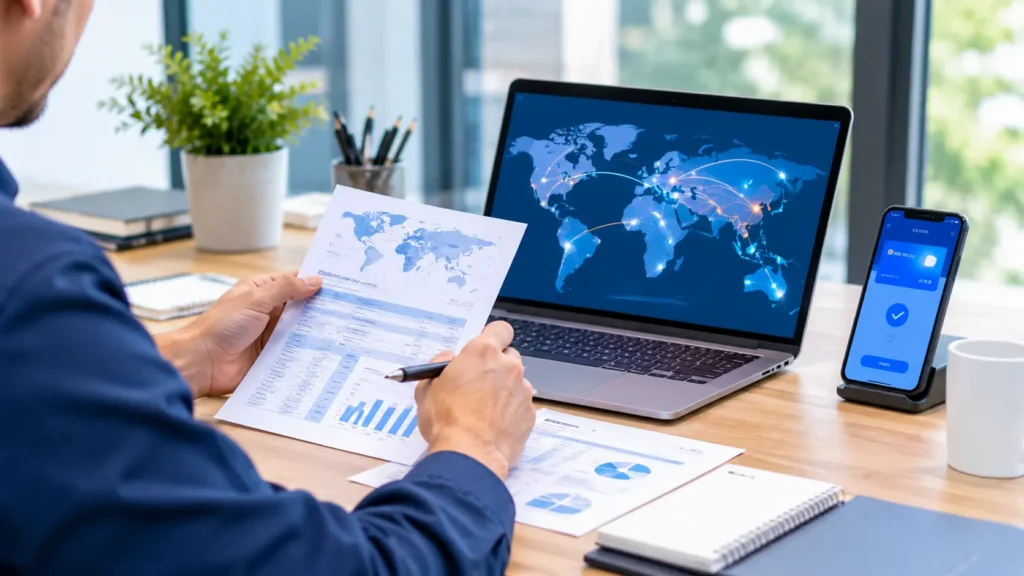
Purchasing credit for Amazon sellers lets a seller pay an overseas supplier without putting up the full cash amount upfront. Instead of wiring money internationally and absorbing conversion fees, a third party, often a 3PL, pays the vendor directly through domestic banking channels. The seller repays afterward, once inventory starts selling.
Why Traditional Financing Doesn’t Always Fit
Amazon stopped lending directly. Amazon ended its own direct lending program for US and UK sellers in March 2024. Financing offers inside Seller Central now come exclusively through third-party partners. Access is invitation-only.
Business credit cards carry foreign transaction fees. Paying an overseas supplier with a standard business card often triggers foreign transaction charges on top of the purchase. This quietly inflates the real cost of inventory.
Most financing requires trading history and revenue minimums. Lines of credit and inventory financing typically require six or more months of sales history. Many also require $10,000 or more in monthly revenue before a seller even qualifies.
International sellers face extra barriers. Many financing products are built around a US business entity, a US credit history, or a US bank account. An overseas-based seller doesn’t necessarily have any of these.
How Purchasing Credit for Amazon Sellers Actually Works
The 3PL pays the vendor directly. Instead of the seller wiring funds internationally, the 3PL pays the supplier through its own domestic banking relationships.
Fees stay lower. Paying through domestic channels avoids the international wire fees and currency conversion spread a seller would otherwise absorb on every payment.
Repayment happens after the fact. The seller repays the 3PL once cash comes in. This typically happens through Wise, PayPal, Payoneer, or similar services, rather than needing the full amount upfront.
Credit scales with the relationship. A credit card or loan comes with a fixed limit set by a credit bureau. Purchasing credit through a 3PL is often tied to order volume and the ongoing relationship instead.
Who Actually Benefits From This
Sellers scaling faster than their cash flow allows. A seller with strong sales but limited working capital can place a larger purchase order. They don’t have to wait for enough cash to accumulate first.
International sellers without US credit history. A seller based outside the US often can’t qualify for a US business line of credit, even with strong Amazon sales. The credit infrastructure simply doesn’t recognize their history.
Sellers trying to avoid high-interest short-term financing. Merchant cash advances and short-term loans can carry steep effective rates. Paying a vendor directly through a 3PL’s banking relationship sidesteps that cost structure entirely.
What to Check Before Using Purchasing Credit
What’s the actual credit limit, and how is it determined? Ask whether it’s based on order volume, sales history, or a flat cap. This tells you what you can realistically plan around.
What repayment methods are accepted? Confirm whether Wise, PayPal, Payoneer, and wire transfer are all supported. This matters most if you’re paying from outside the US.
Are there fees beyond the vendor payment itself? Some arrangements add a service fee or interest on top of the credit extended. Get this in writing before committing to a purchase order.
Does the credit limit grow as you scale? A provider offering only a fixed, one-time credit amount is less useful long-term. Look for one that scales with your order volume.
How Shiprep’s Purchasing Credit Works for Amazon Sellers
Shiprep offers purchasing credit up to $100,000 for sellers working with overseas vendors. We pay your supplier directly through our domestic banking channels. That removes the international transaction fees you’d otherwise absorb. You repay through Wise, PayPal, Payoneer, or similar services once your inventory starts selling.
This is built specifically for international sellers who run into the barriers traditional financing creates. You can see our full range of services on our services page. Read more about how this fits into our broader support for overseas sellers in our guide to 3PL prep center services for international sellers.
No advance payment, no setup fee, and no minimum order quantity apply to our core fulfillment services either. You can estimate your prep and shipping costs with our pricing calculator.
For a broader look at the current Amazon-connected financing landscape, Amazon’s official Seller Central financing resources outline the options available directly through Seller Central.
Purchasing Credit for Amazon Sellers: Frequently Asked Questions
Does Amazon still offer direct loans to sellers?
No. Amazon stopped underwriting direct loans for US and UK sellers in March 2024. Financing inside Seller Central now comes exclusively through invited third-party partners.
Can international sellers without a US credit history get purchasing credit?
Yes, through providers like a 3PL that base credit on order volume and the business relationship rather than a traditional US credit check. This is often the main barrier international sellers face with conventional financing.
How is purchasing credit different from a business line of credit?
A bank or lender typically issues a business line of credit based on credit score and revenue history, with funds going directly to the seller. Purchasing credit through a 3PL pays the vendor directly and is often tied to order volume instead.
Are there interest charges on purchasing credit from a 3PL?
This varies by provider. Always confirm whether there’s a service fee, interest charge, or purely a repayment timeline before committing to use the credit.
What’s the maximum purchasing credit typically available?
This varies by provider and relationship. Shiprep offers up to $100,000 for sellers working with overseas vendors, scaled to order volume and business history.
Get a free quote from Shiprep to see how purchasing credit could work for your next overseas inventory order.